Plastics and IVF
Plastics define modern life. Chemicals from plastics, micro- and nanoplastics affect our health, including IVF.

Medical student Chloe inquires about the effect of plastics on IVF.
Polyvinyl chloride (PVC), polyethylene (PE), polystyrene (PS) and polycarbonate
We are in contact with items made from PVC, PE, PS and polycarbonate everyday. They are polymers of vinyl chloride (CH2-CHCl), ethylene (CH2=CH2), styrene (a single vinyl group C8H8 attached directly to a benzene ring C6H5), and bisphenol-A (BPA) and phosgene gas (diphenyl carbonate), respectively (figure below).
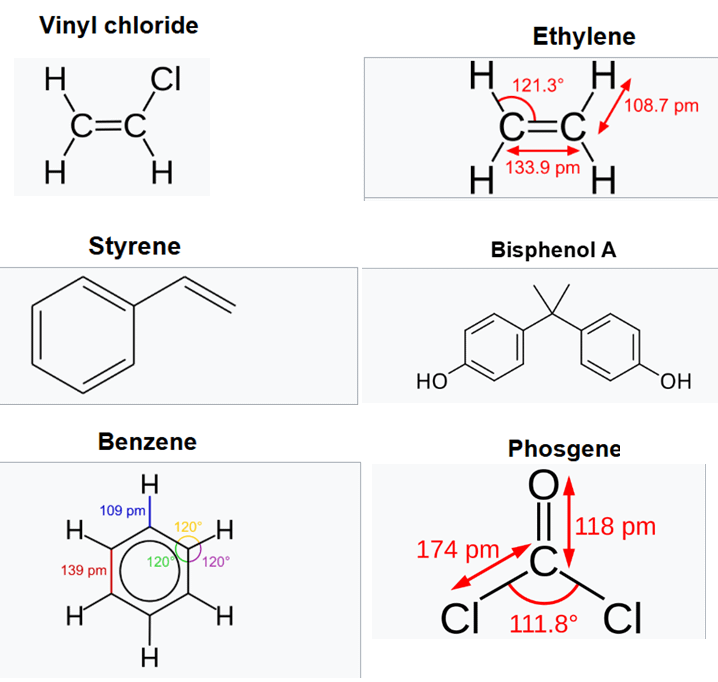
Natural PVC is hard. PVC products come in two forms, rigid PVC or elastic PVC.
Rigid PVC (or natural PVC) is rigid, commonly used in durable goods, construction materials, and piping systems.
Elastic PVC is pliable, commonly used in electrical wire insulation, shower curtains, medical tubing, and inflatable toys. Its production requires the addition of plasticizers (more below).
PE is the most common source of micro- and nanoplastics because it is the most abundant and widely used plastic. PE can be either soft or hard, depending on its density and structure.
Low-Density PE (LDPE) is highly flexible, pliable, and lightweight. It’s used in squeeze bottles, shopping bags, single use bags, and food wraps.
High-Density PE (HDPE) is hard and stiff. It’s used in milk jugs, cutting board and playground equipment.
Ultra-High Molecular Weight PE (UHMWPE) is exceptionally hard, resistant to abrasion and impact. It’s used in bulletproof vests and heavy industrial wear pads.
PS is used to produce rigid goods (such as CD cases and appliances), laboratory ware (such as IVF culture dish) or lightweight foam (Styrofoam) for food packaging and insulation. Its production normally does not require additive.
Polycarbonate is considered one of the safest and most inert plastics, posing low health risk under normal condition and used as intended. It is durable, transparent and resists impact and heat. It is widely used in protective gear (such sports eyewear and shatterproof glasses), automotive parts, medical devices, and electronics.
Plasticizers, BPA and harmful chemical from plastics
Rigid PVC in its original state should pose little health concern if no toxic material or heavy metal was added during its production. Elastic PVC may pose health concern from leached plasticizers which were added during production.
Since no additive is needed to produce PE, PS, and polycarbonate, they are considered generally free of harmful chemicals when used as recommended. However,
PS: U.S. National Toxicology Program consider PS as a likely human carcinogen due to leached styrene when it is exposed to heat, acid, or oil/lipid.
PE: recycled PE products may be contaminated by elastic PVC products which contain plasticizers.
Polycarbonate: polycarbonate products, through wear and tear and improper handling, may release BPA.
Plasticizers and BPA are endocrine-disrupting chemicals (EDCs)
Most commonly used phthalate plasticizers include: Di(2-ethylhexyl) phthalate (DEHP), Dibutyl phthalate (DBP), and Diethyl phthalate (DEP). They may interact with estrogen receptor. Specifically,
Estrogen mimics: Dibutyl phthalate (DBP) and its related compound Butyl benzyl phthalate (BBP) and weakly mimic the action of estradiol.
Anti-Estrogenic Activity: DEHP and DINP block estradiol from binding to its receptor.
Pathway Alterations: Phthalate may exposure has been shown to alter hormone synthesis and upregulate estrogen and beta-catenin signaling pathways, leading to endometrial changes in animal models.
The literature shows BPA mimics the effect of estrogen. It is considered a xenoestrogen.
A good summary of plasticizers can be found in SpecialChem website.
Micro- and nanoplastics
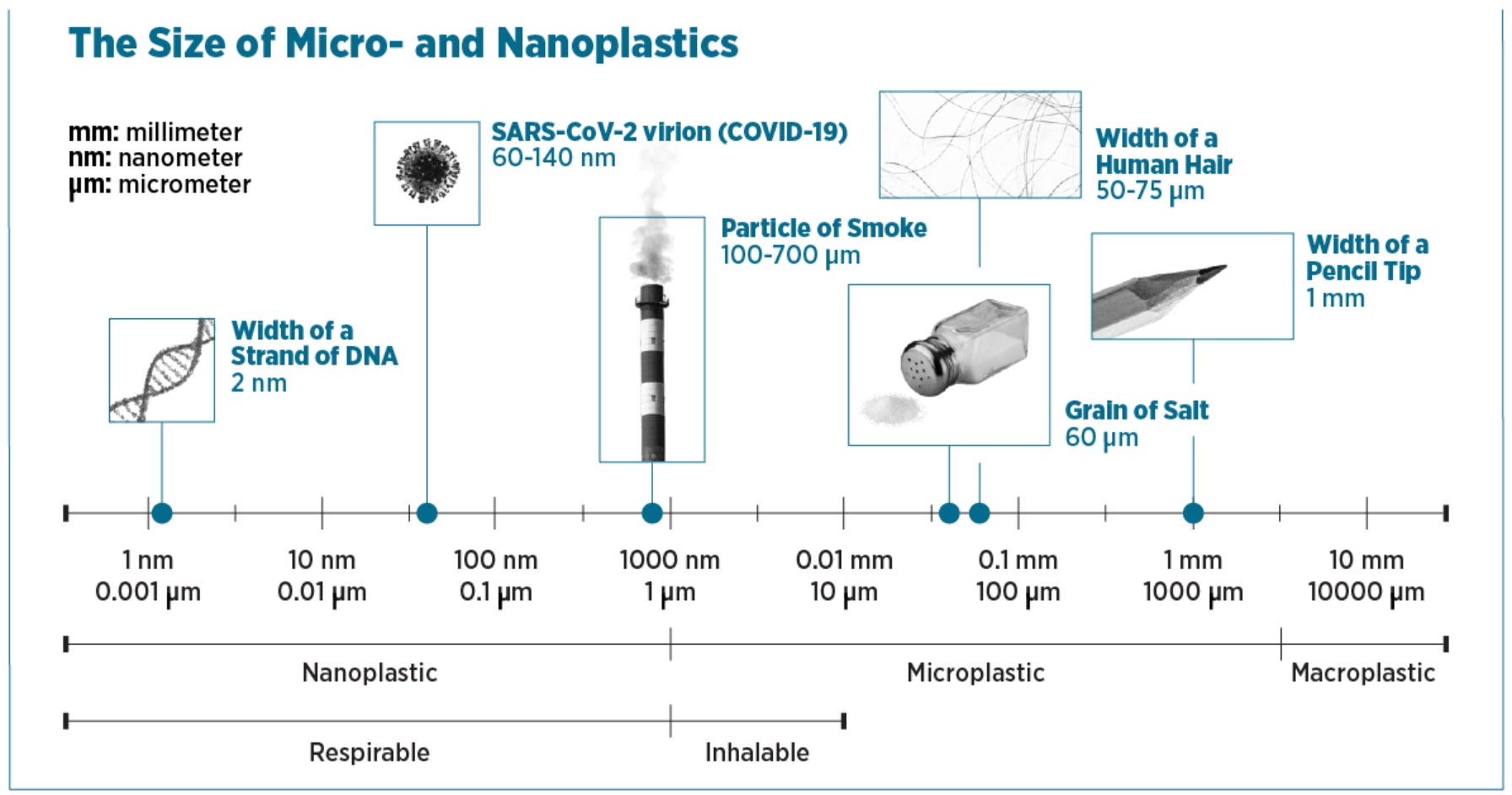
Microplastics are < 5 mm but ≥ 1 μm; and nanoplastics, < 1 μm. They are a category of pollution, not a specific material. PVC, PE, PS, and polycarbonate break down into microplastics and nanoplastics - no exception.
Micro- and nanoplastics pollute the global environment and are widely ingested or inhaled by humans. It is estimated that humans absorb ~100,000 particles annually (J Int Med 2025 Dec;298(6):532-561). A comparison chart of the sizes of micro- and nanoparticle is shown below.
Nanoplastics and IVF
Multiple studies confirmed the presence of nanoplastics in human follicular fluid. A recent report (ACS Nano 2025 Jul 21;19(30):27159–27172) showed nanoplastics were present in human follicular fluid and seminal plasma. Levels of nanoplastics in follicular fluid or seminal negatively impacted the fertilization rate or the motility of sperm, respectively. Despite this, embryo implantation and clinical pregnancy rates were not affected.
Another case-control study showed ovarian reserve is also negatively affected by nanoplastics. Total microplastics level, PE and PVC levels were negatively correlated with AMH levels.
How nanoplastics affect IVF (and reproduction)
The proposed mechanism is as follows:
Oxidative stress: presence of nanoplastics increases reactive oxygen species (ROS), which leads to mitochondrial dysfunction.
Inflammation (foreign body reaction): nanoplastics elevate cytokines such as IL10ra, IL1a IL33 …etc.
Metabolic disruption: nanoplastics affect ovarian steroidogenesis and general metabolic processes leading to abnormal microenvironment inside the follicle.
Endocrine disruption: this is caused by chemicals released from the nanoplastics or dysregulated hypothalamic-pituitary-ovarian axis.
In summary
Micro- and nanoplastics is a growing concern to human health, including fertility and the outcome of IVF treatment. A new era of reproductive toxicology has just begun and we are in a uncharted territory.
===
To dear readers,
Access to “Fertilityandhormones” will become partially subscription-based in the near future. Some posts will remain free, but others (including archives) will be accessible to subscribers only.
Income will be used to defray the preparation costs. Furthermore, the number of subscribers shows the extent to which readers value “Fertilityandhormones”.
Thank you!
Dr. Huang